Everyone's talking about it all the time, in every possible context.
In the world of hot sauces, especially since the explosion in popularity of extreme hot sauces and challenges like Hot Ones, we’re constantly bombarded with impressive numbers: 500,000 SHU, 1 million, 2 million, or even more. These numbers are everywhere—on labels, in ads, on retail websites, and in tasting videos. Many people buy a sauce thinking that a higher score guarantees more heat. But there’s often a disconnect between the advertised number and the actual burn. This has given rise to a persistent controversy: is the Scoville scale, a century-old tool, still reliable, or has it become a misleading marketing tool?
A historical measure that has evolved.
The Scoville scale was created in the USA in 1912 by pharmacist Wilbur Scoville to quantify the spiciness of peppers. It is based on the principle of dilution: it measures how many times a pepper extract must be diluted in sweet water for the burning sensation to become imperceptible to taste. The result is expressed in Scoville Heat Units (SHU), corresponding to the number of dilutions required.
It's hard to believe, but originally the method was entirely human! Testers would taste increasingly concentrated dilutions until the spiciness disappeared... This process had many flaws: tolerance to spiciness varied greatly from person to person, taste fatigue quickly altered sensitivity, and results could fluctuate by more or less 50% depending on the day, the testers, or the laboratories. Despite these limitations, the scale remained the reference for decades.
Since the end of the 20th century, high-performance liquid chromatography has replaced the subjective method. It directly measures the capsaicin and capsaicinoids responsible for spiciness, providing much more precise and reproducible results. However, the old subjective scores continue to influence comparisons and mindsets among chili enthusiasts.
Misleading labels.
The most heated controversy concerns the use of Scoville units on hot sauce bottles. The scale was designed for pure or dried peppers, measuring heat per gram of dry matter. However, many manufacturers display the score of the hottest pepper present in the recipe, even if it only represents 2 to 20% of the final product. A sauce labeled "1,000,000 SHU" can therefore be as hot as a sauce with 50,000 or 150,000 SHU once diluted with vinegar, sugar, fruits (or water for most industrial sauces), or other ingredients. This practice falls under misleading marketing, and it is regularly denounced on specialized forums and networks, without effect.
This misleading practice, which has become almost systematic among the most visible and extreme brands, creates a destructive vicious circle for the entire market. Honest manufacturers, who prefer to indicate a realistic score corresponding to the overall heat of their sauce (or who correctly measure the effective concentration of capsaicinoids in the finished product), consistently find themselves outpaced on shelves and in online rankings by competitors who announce astronomical figures based solely on the hottest pepper used, even in minuscule amounts, or on pure speculation.
To avoid disappearing from the radar of consumers obsessed with "records" and rankings like Hot Ones, many end up succumbing to the pressure and adopt the same inflated method: displaying the SHU of the featured pepper rather than the actual perceived heat. The result is an absurd escalation where almost everyone "lies" a little (or a lot) to stay competitive in a race for the hottest that has little to do with taste pleasure or honest experience. What was supposed to be a simple scientific indicator has turned into a collective marketing weapon, penalizing the few players who still try to promote transparency.
The natural variability of peppers.
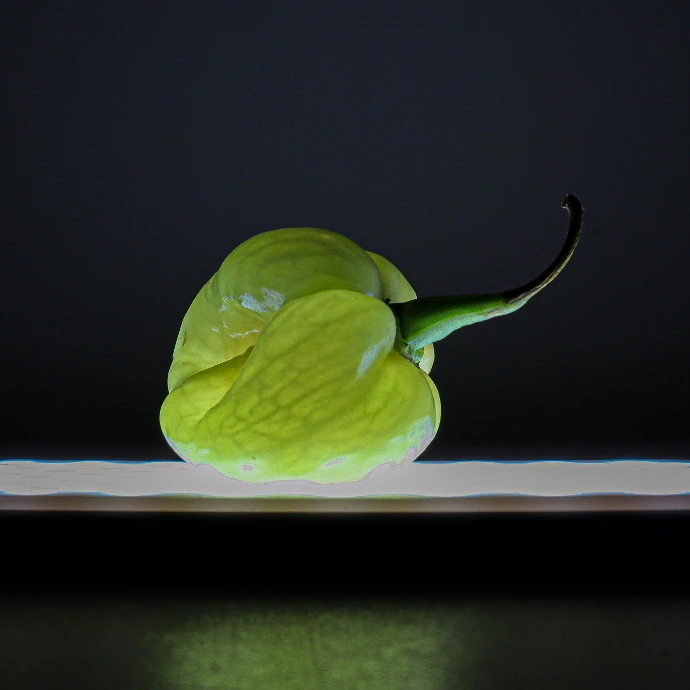
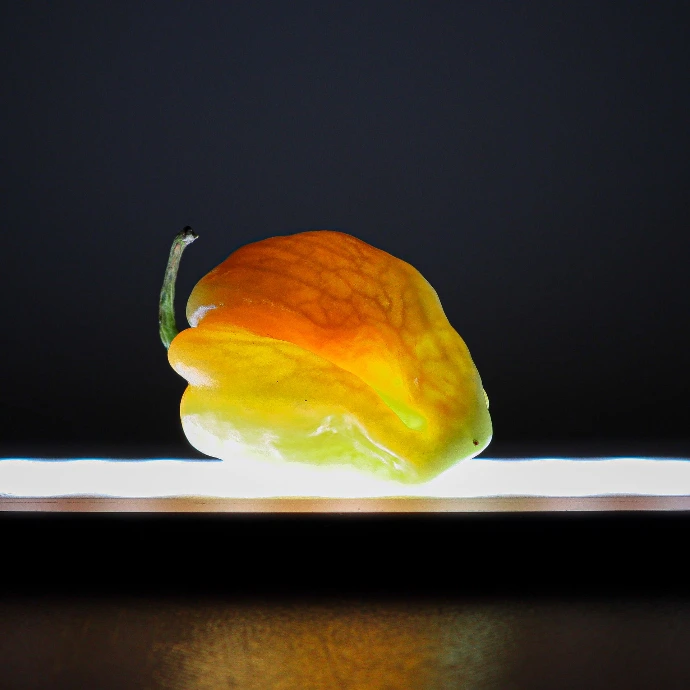
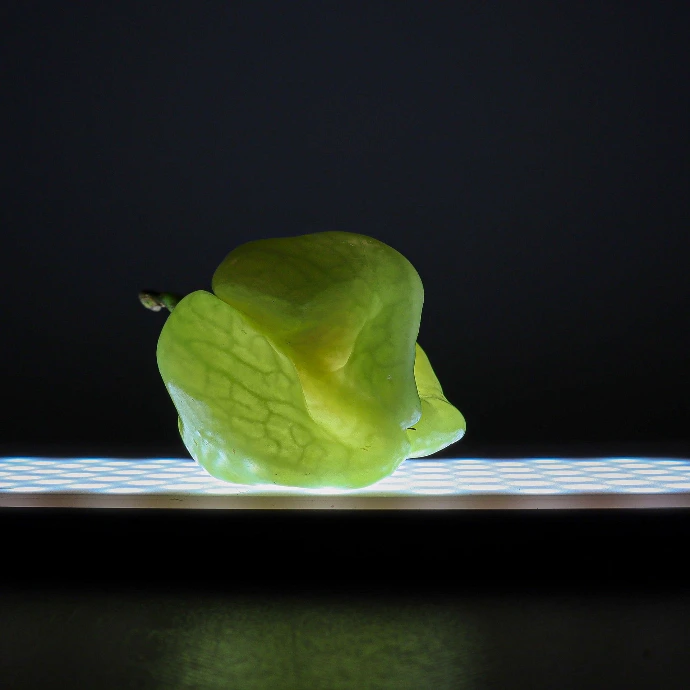
The same cultivar of pepper can show considerable variations depending on growing conditions: soil, sunlight, irrigation, water stress, or fruit maturity. A Carolina Reaper, for example, can range between 1.2 and 2.2 million SHU. Announcing a precise record like "1,641,183 SHU" (that of the Carolina Reaper in 2013) remains scientifically fragile, even if these figures are often used to fuel media coverage and Guinness records.
Since the 2010s, an intense competition has pitted the inventors of extreme varieties (Naga Viper, Trinidad Scorpion Butch T, Carolina Reaper, Pepper X…) against each other. Some accuse the creators of these peppers of inflating results through opaque internal tests, using pure capsaicin extracts to artificially boost scores, or prioritizing buzz over taste, which is often deemed chemical and unpleasant in some of these ultra-hot products.
Go read our article on Carolina Reapers to learn a bit more about their somewhat shady origins.
Go read our article on Carolina Reapers to learn a bit more about their somewhat shady origins.
Modulation of heat by the ingredients of the sauce.
To complicate matters further, the perceived spiciness does not solely depend on the concentration of capsaicin (or capsaicinoids) present in the chili used. The burning sensation is heavily modulated by the other ingredients in the sauce, which interact with the sensory receptors in the mouth and influence how the brain interprets heat.
Sugar, for example, acts as a barrier: it slows down the binding of capsaicin to pain receptors (TRPV1 specifically linked to the burning sensation), delays the onset of spiciness, often makes it more gradual, and reduces its maximum intensity, which explains why sweet sauces sometimes seem "milder" despite having a stronger chili.
Acidity, typically provided by vinegar or citrus, can on the contrary amplify the perception of spiciness by lowering the pH and facilitating interaction with the receptors, making the burn more intense and immediate. Other components like ginger (which contains gingerol, a similar irritant that also activates TRPV1 receptors, but with a heat that is often warmer and more transient than burning), fats (which solubilize capsaicin and release it more slowly, potentially causing intestinal pain), garlic, onions, or even salt also play a role: they can mask, prolong, intensify, or redistribute the sensation of heat.
Humans, too, are all different; some will be more sensitive than others to this or that combination of ingredients...
Thus, two sauces with the same theoretical Scoville score can offer radically different experiences depending on their overall balance of ingredients, which is another reason why raw numbers are so unreliable for predicting the true perceived heat.
The intrinsic limits of the scale.
Beyond the controversies, the Scoville scale says nothing about several essential aspects of spiciness: the speed of the burn's onset, its duration, its location (tongue, throat, palate, stomach), or the associated flavor notes. It can sometimes be a useful tool for general comparisons, but more and more enthusiasts prefer actual tastings, a more complete description, or simply their own experience.
The strongest arguments against the Scoville scale applied to sauces are relentless: massive dilution in recipes, huge natural variability of peppers, sometimes biased tests, artificial extraction of capsaicin, total lack of information on the actual sensory profile, and powerful modulation by ingredients like sugar, acidity, or ginger. The gap between the displayed SHU and the experienced spiciness is so frequent and significant that it makes manufacturers' numbers almost useless, if not misleading.
NEVER rely on the Scoville units indicated on a hot sauce bottle to judge its actual heat. The only reliable and honest system is to create, within the same brand, a comparative internal scale: test and rank the sauces against each other.
This is what we do at SWET, as it is the only way to know roughly what to expect in the bottle, without being misled by inflated marketing numbers.
This is what we do at SWET, as it is the only way to know roughly what to expect in the bottle, without being misled by inflated marketing numbers.
Text & images by Thibault Fournal.
Copyright SWET 2026.
Go further by reading our articles dedicated to peppers:
Votre snippet dynamique s’affichera ici... Ce message s’affiche car vous n’avez pas fourni suffisamment d’options pour en récupérer le contenu.